

South Carolina works well for retirement because it gives people more than one kind of lifestyle. You can choose the coast, a historic small city, or a larger inland hub without leaving a state that already has strong retiree appeal. Nearly 19.7% of South Carolina residents are 65 or older. The state’s median owner-occupied home value is $259,000, below the U.S. figure of $332,700. It also does not tax Social Security benefits, allows eligible residents 65+ to deduct up to $10,000 of qualifying retirement income, and offers a homestead exemption on the first $50,000 of fair market value for qualifying homeowners.
1. Aiken
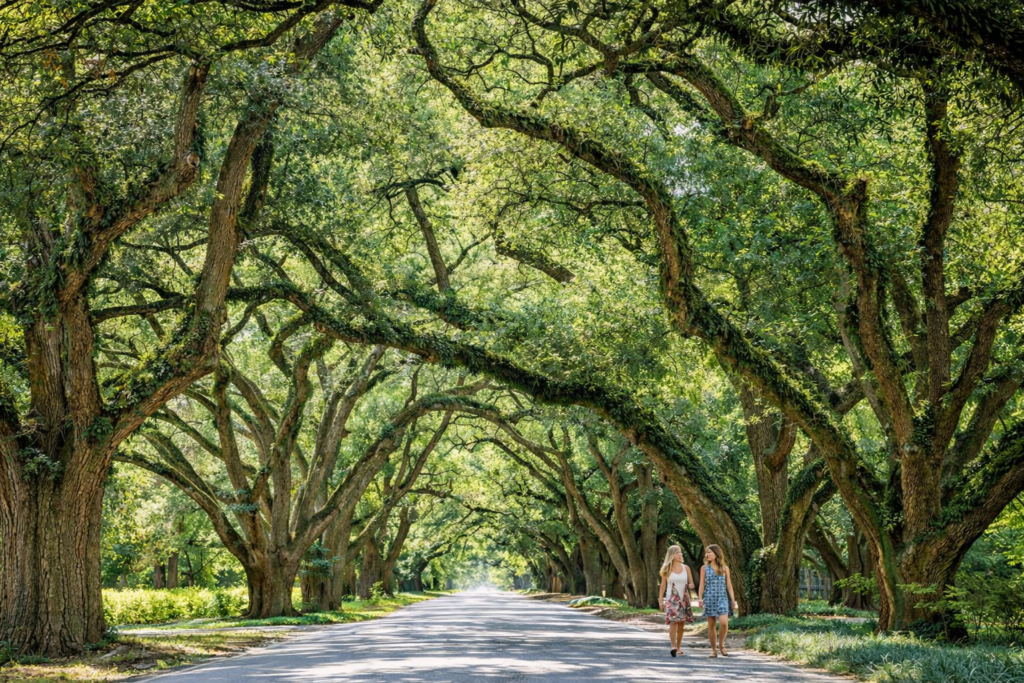
Aiken stands out for retirees who want a true retirement-age community without paying Lowcountry prices. The city’s 2024 population was 32,694, and 29.1% of residents are 65 or older, one of the highest senior shares on this list. Its median owner-occupied home value was $286,800 in 2020–2024, with median monthly owner costs of $1,448 with a mortgage and $510 without one. Median household income reached $76,746. Healthcare access is a real plus: Aiken Regional Medical Center is a 273-bed acute-care hospital in the city. Lifestyle also matters here. Aiken is widely known for its equestrian culture, and Aiken County highlights year-round activity including polo, dressage, jumping, fox hunting, and trail riding, which helps keep daily life active and socially connected.
2. Greenville

Greenville is a strong fit for retirees who want a lively downtown, major healthcare, and a lot to do without moving into a giant metro. The city’s 2024 population was 74,371, and home values are higher than the state median, with owner-occupied homes at $487,500, so this is not the bargain option. But the trade-off is access. Prisma Health Greenville Memorial Hospital is a 746-bed hospital and a major regional medical center. The city also offers one of the best everyday recreation assets in the state: the Swamp Rabbit Trail network runs about 28 miles through the area for walking and biking. Greenville’s median household income was $71,472, and its mean commute time was 19 minutes, supporting a practical, manageable daily routine for retirees who still want energy around them.
3. Beaufort
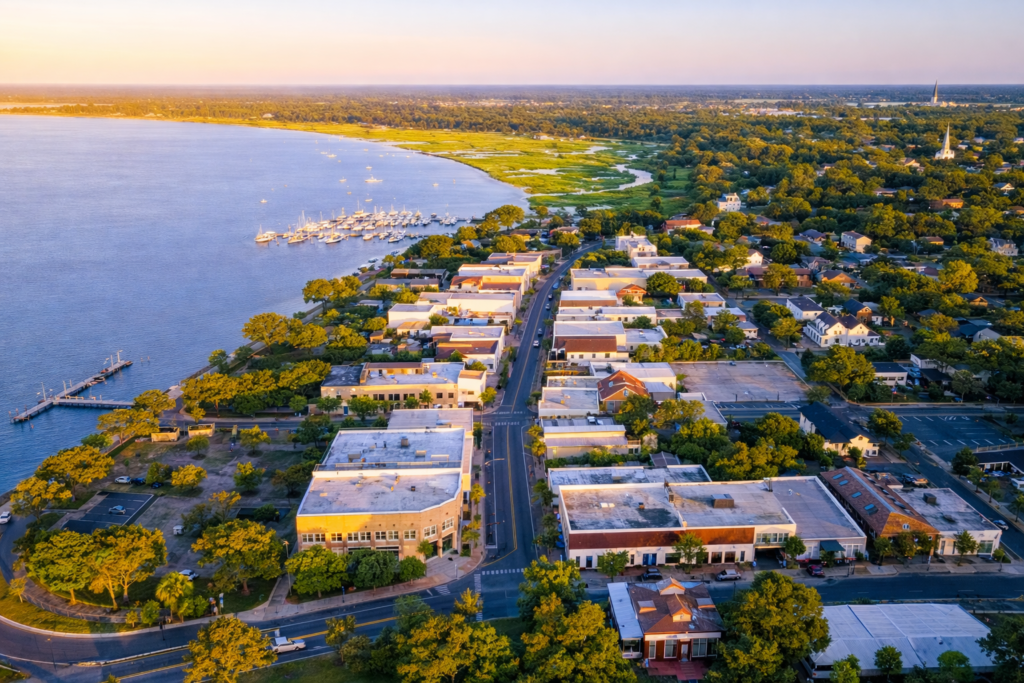
Beaufort is a good retirement choice for people who want coastal scenery and historic character without the scale and price pressure of Hilton Head or Charleston. Its 2024 population was 14,334, so it stays small and easier to navigate. Median owner-occupied home value came in at $345,400, with median monthly owner costs of $1,912 with a mortgage and $603 without one. Beaufort Memorial Hospital, the area’s nonprofit hospital, is licensed for 201 beds and is the largest medical facility between Charleston and Savannah. Day-to-day quality of life is a major reason retirees choose Beaufort: Henry C. Chambers Waterfront Park anchors downtown, and the Beaufort Historic District supports self-guided walking through one of the state’s best-preserved historic environments. Median household income was $61,220, and poverty was 12.5%, giving Beaufort a more stable profile than many small tourist-oriented towns.
4. Columbia

Columbia makes sense for retirees who care most about big-city healthcare, services, and easier housing costs. The city’s 2024 population was 144,788, making it the largest place on this list. Its median owner-occupied home value was $264,300, very close to the statewide median and well below many coastal retirement markets. That helps if housing budget matters more than postcard scenery. Medical access is a major advantage: Prisma Health Richland Hospital is a 641-bed regional teaching hospital in Columbia. The city also gives retirees meaningful outdoor options, not just traffic and buildings. Riverfront Park offers a flat, paved walking trail along the old canal towpath, and Experience Columbia notes a two-and-a-half-mile trail with river views. Columbia is not the oldest city here, with 11.5% of residents 65+, but it compensates with scale, specialists, and year-round convenience.
5. Myrtle Beach
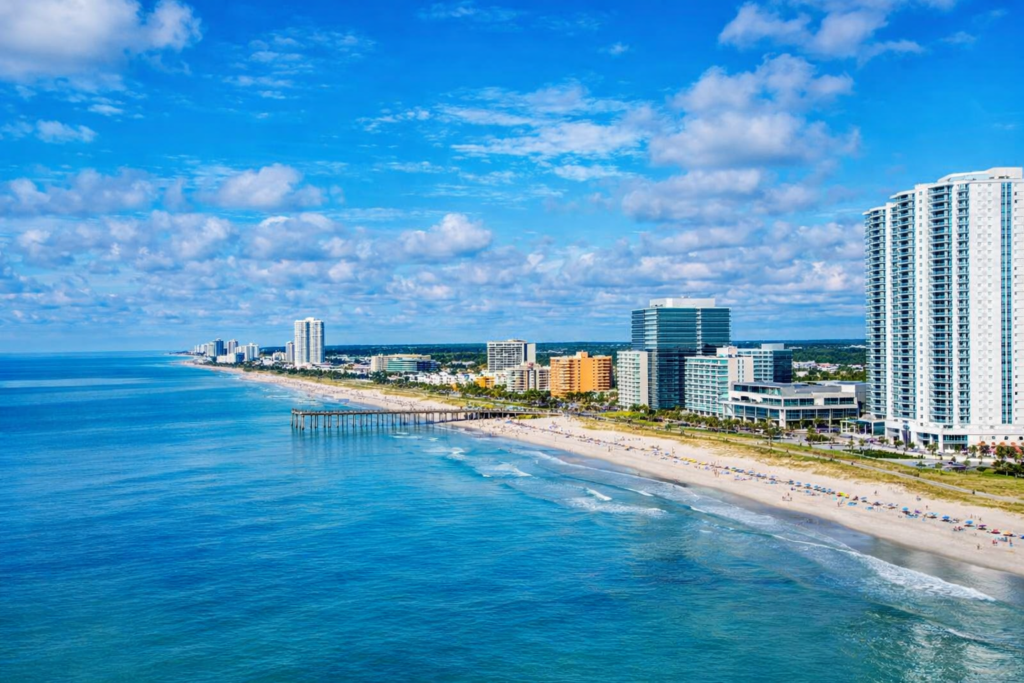
Myrtle Beach is one of South Carolina’s clearest retirement magnets for people who want a coastal lifestyle and a larger retiree peer group. The city’s 2024 population was 40,535, and 23.7% of residents are 65 or older. That matters because retirees often care about finding a place where services, social life, and housing are already shaped around older residents. Housing is not cheap, but still more approachable than some prestige coastal markets: the median owner-occupied home value was $388,800. Medical access is stronger than many beach towns can offer. Grand Strand Medical Center is a 403-bed acute-care hospital with major regional services. On the lifestyle side, retirees get both the famous 1.2-mile oceanfront boardwalk and the quieter Myrtle Beach State Park, which includes a one-mile stretch of relatively undeveloped beach.
6. Summerville
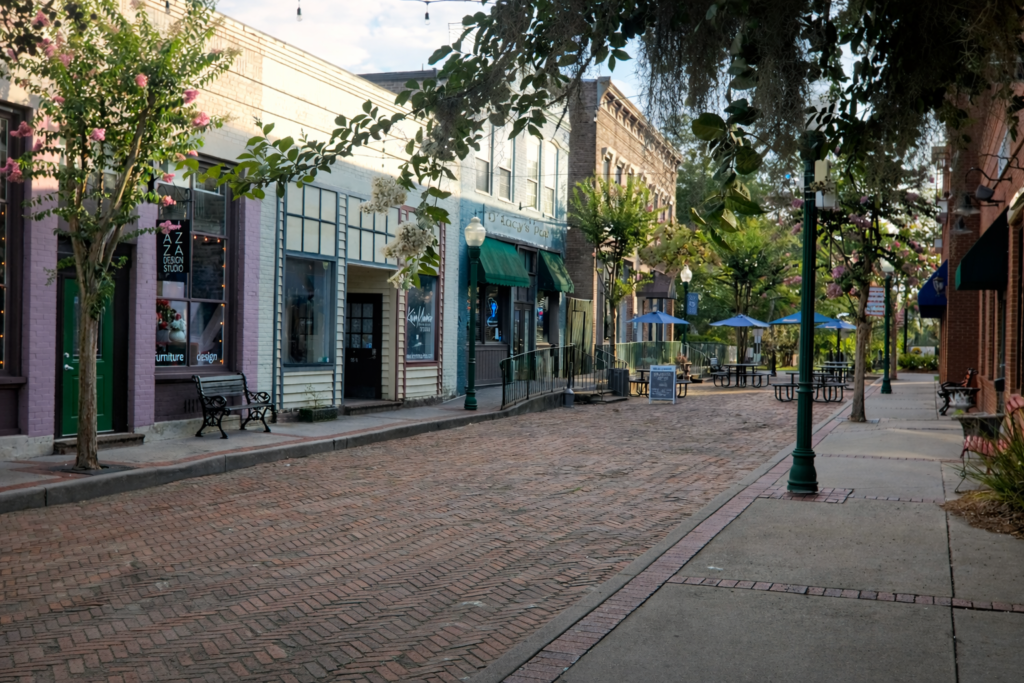
Summerville is a practical retirement option for people who want to stay near Charleston’s larger metro advantages without paying Charleston prices or dealing with its daily tourism load. The town’s 2024 population was 52,625. Its median owner-occupied home value was $328,100, notably below many better-known coastal markets, and the owner-occupied rate was 69.1%, which usually points to a more settled residential base. Median household income reached $81,046. Healthcare access is improving in a meaningful way: Summerville Medical Center expanded to 174 licensed beds in 2025. The town also offers easy low-stress recreation. Azalea Park, just outside downtown, has walking trails, ornamental gardens, tennis courts, and everyday green space that actually matters once retirement becomes about routine, not vacation. Summerville is not the cheapest pick, but it is one of the most balanced.
7. Hilton Head Island
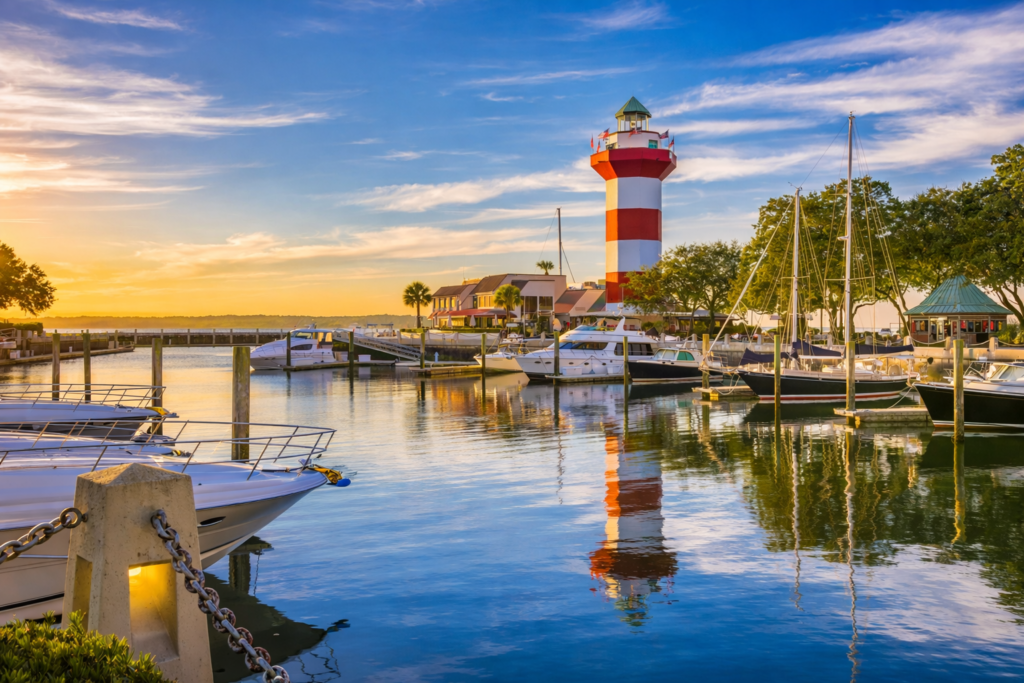
Hilton Head Island is the premium choice on this list. It is not the affordable one. But for retirees with the budget, it offers one of the strongest lifestyle packages in South Carolina. The town’s 2024 population was 38,158, and 39.2% of residents are 65 or older, by far the highest share among these places. That tells you retirement is not a niche here; it is part of the town’s structure. The median owner-occupied home value was $687,400, and owner occupancy was 78.7%, so this is clearly a higher-end market. In return, retirees get excellent everyday livability: the town provides more than 64 miles of public pathways and nature trails, and Hilton Head Hospital is a 93-bed acute-care hospital on the island. Median household income was $94,657 and poverty just 8.6%, reinforcing Hilton Head’s financially stable profile.
