

Retiring in New York does not have to mean paying downstate prices. The state’s better-value options are mostly upstate, where housing costs, rents, and cost-of-living scores sit far below New York City and below state averages. For this list, we focused on cities with lower home values or rents, lower overall living costs, and practical retirement factors such as hospital access, shorter commutes, and a solid share of older residents. None is perfect, and statewide taxes still matter, but these seven cities stand out for retirees who want affordability without giving up healthcare, everyday convenience, or a sense of community.
1. Jamestown

Jamestown is one of the clearest affordability plays in New York. BestPlaces gives it a cost-of-living score of 75.5, meaning overall costs run well below both the U.S. and New York averages. Housing is especially cheap: the Census Bureau reports a median owner-occupied home value of $87,700, median gross rent of $759, median monthly owner costs of $974 with a mortgage and $472 without one. The city also has an older-leaning profile, with 17.8% of residents age 65 or older, and an average commute of just 15.2 minutes. Healthcare is a real plus for retirees, since UPMC Chautauqua is a 277-bed hospital in Jamestown itself. For budget-first retirees, few New York cities beat the math here. It remains exceptionally affordable.
2. Elmira
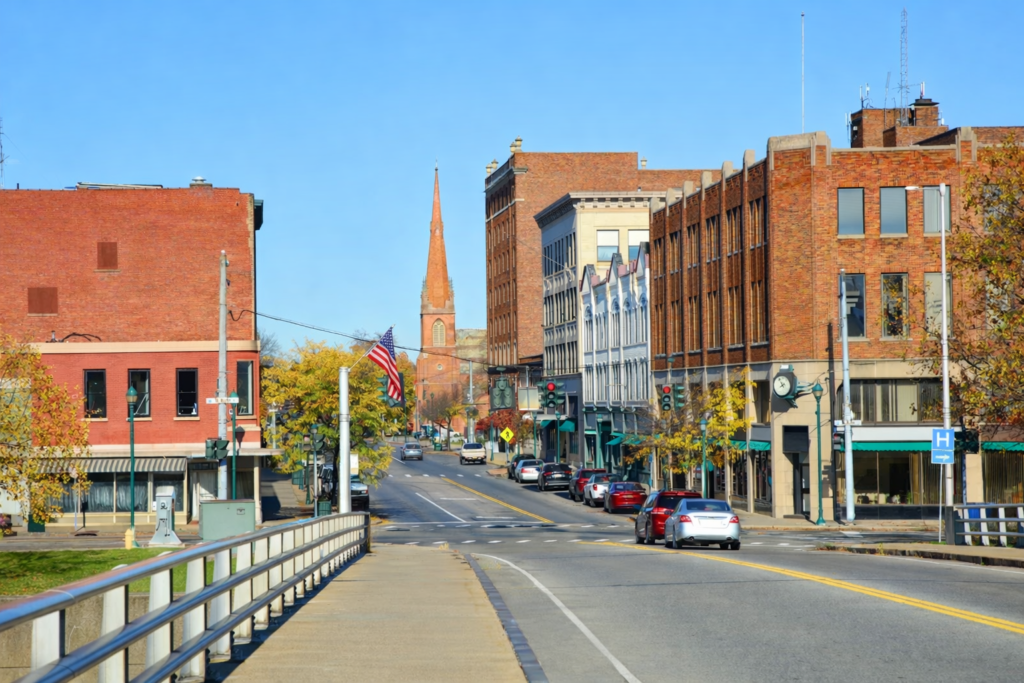
Elmira works for retirees because the numbers stay low across the board. Its BestPlaces cost-of-living score is 77.8, or 22.2% below the U.S. average and 36.0% below the New York average. Census data show a median home value of $93,000, median gross rent of $909, monthly owner costs of $1,124 with a mortgage and $567 without one. Elmira’s average commute is 18.7 minutes, which helps keep day-to-day errands manageable, and the city’s median household income is $43,120, reflecting a lower-cost local economy. Healthcare access is stronger than many cities this cheap: Arnot Ogden Medical Center in Elmira is a 256-bed tertiary hospital. For retirees prioritizing housing savings, Elmira remains one of New York’s strongest values today. It suits fixed incomes.
3. Binghamton
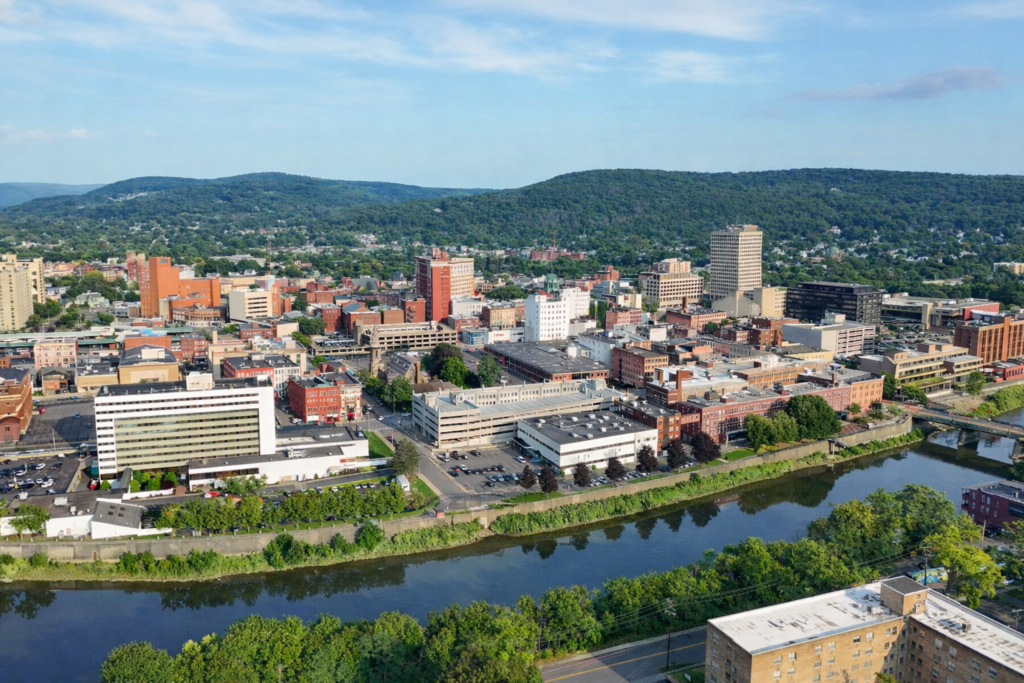
Binghamton offers a solid middle ground for retirees who want low costs without dropping to the very bottom tier of city services. BestPlaces gives it a cost-of-living index of 88.3, below the national benchmark of 100 and well below the New York average. Census figures put the median owner-occupied home value at $124,800 and median gross rent at $870, with monthly owner costs of $1,301 with a mortgage and $626 without one. The city also has a relatively older profile for an upstate city, with 18.0% of residents age 65 or older. Average commute time is 16.5 minutes. Healthcare access is a major retirement advantage because UHS Binghamton General Hospital provides 220 beds and 24-hour emergency care locally every day.
4. Utica
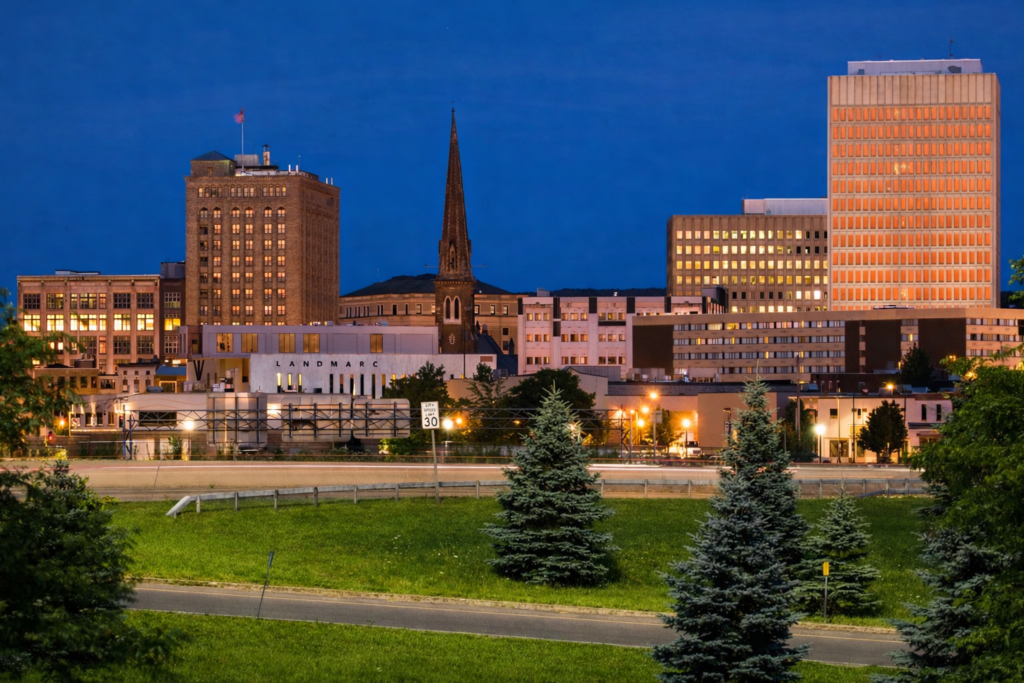
Utica gives retirees a useful balance of affordability, healthcare access, and city-level services. BestPlaces assigns Utica a cost-of-living score of 85.7, comfortably under the U.S. average. Census data show a median owner-occupied home value of $151,300, median gross rent of $951, monthly owner costs of $1,352 with a mortgage and $594 without one. The city’s average commute is 19.5 minutes, and 15.2% of residents are 65 or older, which supports a more retirement-relevant age mix than many similarly priced places. Healthcare is stronger than the price point suggests: downtown Utica’s Wynn Hospital opened as a 373-bed facility serving the Mohawk Valley. For retirees seeking lower costs and medical depth, Utica is a serious contender. That helps aging in place well.
5. Syracuse

Syracuse is a bigger-city retirement option that still keeps costs under control. Its BestPlaces cost-of-living score is 87.4, below the national average, while Census data put the median owner-occupied home value at $138,400 and median gross rent at $1,039. Monthly owner costs run at $1,238 with a mortgage and $571 without one. Average commute time is just 18.0 minutes, which matters for regular appointments and shopping, and 14.4% of residents are 65 or older. Healthcare depth is strong: St. Joseph’s Health anchors care in Syracuse, and Centro offers half fares for seniors age 65 and older, adding a transportation advantage for retirees who want to cut driving. Syracuse also offers broader shopping and specialist access than many smaller upstate markets.
6. Rochester

Rochester stands out for retirees who want major healthcare access without major-metro housing prices. BestPlaces gives Rochester a cost-of-living score of 88.6. Census data show a median owner-occupied home value of $139,600 and median gross rent of $1,081, with monthly owner costs of $1,244 with a mortgage and $593 without one. Average commute time is 19.3 minutes, and 13.1% of residents are 65 or older. The medical base is unusually strong for this cost level: Rochester General Hospital is a 528-bed tertiary hospital, and UR Medicine’s Strong Memorial Hospital is a 897-bed Level One regional trauma and burn center. Rochester gives retirees scale, specialists, and still-manageable costs. It also has broader specialist access than most cheaper upstate alternatives for retirees.
7. Buffalo

Buffalo is one of the strongest choices for retirees who want big-city healthcare and culture while staying within a modest budget. BestPlaces gives Buffalo a cost-of-living score of 92.1, still below the national average, and Census data show a median owner-occupied home value of $164,200 and median gross rent of $1,046. Monthly owner costs run $1,207 with a mortgage and $473 without one. Average commute time is 19.9 minutes, which is manageable for a city of its size. Healthcare depth is a standout strength: Buffalo General Medical Center has 526 beds, and Roswell Park is an NCI-designated Comprehensive Cancer Center. Buffalo is less cheap than Elmira or Jamestown, but hard to ignore. It suits retirees needing more specialists regionally nearby.
